May 10, 2026
The Cycle Nobody Talks About: How Economic Hardship Keeps Survivors Trapped, and How We Break It
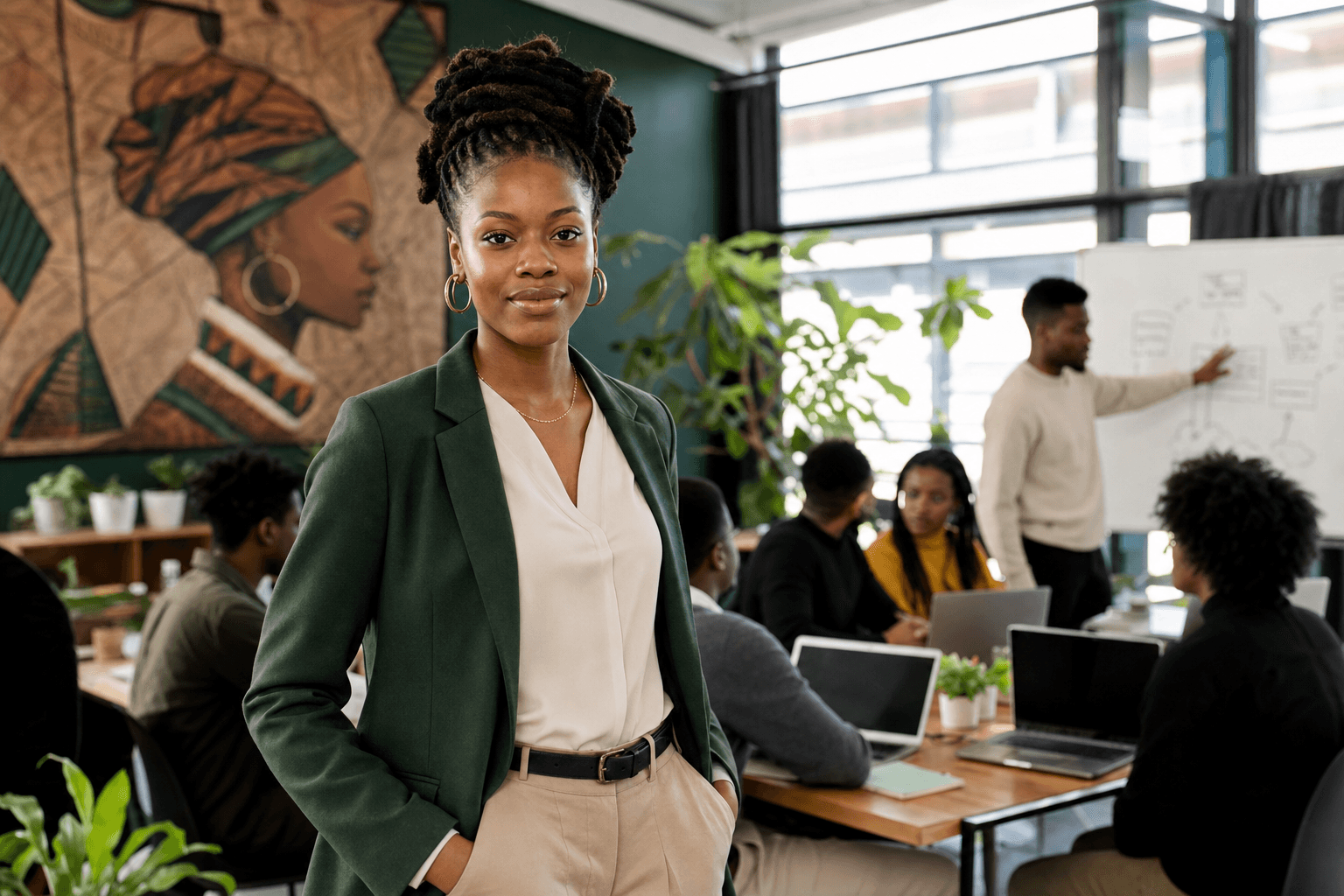
For many survivors, safety is not only about leaving violence. It is about having somewhere to go, a way to earn, and support to rebuild. Economic hardship can turn survival into a trap — but education, work-readiness and enterprise can create a pathway out.
Key insight
Economic independence is not separate from survivor safety. For many survivors, income, education, transport, mentorship and support networks determine whether leaving violence is possible and sustainable.
The hidden link between hardship and safety
There is a conversation South Africa has not yet learned to have honestly. We speak about gender-based violence as though it were purely a matter of personal danger. We speak about youth unemployment as though it were purely a matter of the economy. Rarely do we speak about them in the same breath. Yet for hundreds of thousands of young South Africans, these two crises are not separate emergencies. They are one. And once you understand that connection, the pathway forward becomes far clearer.
Think about what it actually means to leave a dangerous situation. Not in the abstract, but in practice. When a young person has no income, no qualifications that translate into work, and no clear next step, the barrier is not only emotional. It is economic.
Breaking the cycle of violence also means breaking the cycle of economic exclusion.
Why “just leave” is not enough
Global research from the World Bank, UN Women and the UNDP has long confirmed what communities already know: economic dependency is one of the strongest predictors of why survivors stay, and economic empowerment is one of the most powerful protective factors we have.
That insight is hopeful. Because it means that when we invest in a young person’s education, work-readiness and ability to earn, we are not only changing their economic prospects. We are changing their safety. We are giving them options where there were none before.
Building Survivor Pathways in South Africa
At Vuka Africa Youth Hub South Africa, this is exactly what we do. Every young person who walks through our doors, whether a survivor of gender-based violence, a young man navigating a difficult path, or an LGBTQI+ youth seeking their footing, begins with a safety conversation. From there, they choose their own direction.
Our South Africa Survivor Pathways approach connects immediate support with long-term opportunity. It links safety conversations, education access, employability, entrepreneurship and mentorship so that young people can move from crisis toward independence.
The pathway model
Safety conversation → Learning pathway → Skills and mentorship → Work or enterprise → Sustainable livelihood
This is the bridge Vuka Africa works to build: not a once-off intervention, but a practical route from vulnerability to agency.
From survival to opportunity
Some young people access bursaries, learnerships or TVET college placements through EmpowerLearn. Others build the practical skills employers actually need and move into roles with twelve months of follow-up mentorship through EmpowerYouth. Others launch their own enterprises with training, coaching and links to seed funding through EmpowerEntrepreneur.
EmpowerLearn
Education, bursaries, learnerships and TVET pathways that help young people continue learning and build recognised skills.
EmpowerYouth
Work-readiness, practical employability skills and twelve months of follow-up mentorship for young people building a route into work.
EmpowerEntrepreneur
Enterprise training, coaching and seed-funding connections for young people who can build income through entrepreneurship.
Explore the South Africa Survivor Pathways model
Learn how Vuka Africa connects safety, education, mentorship, work-readiness and enterprise into practical pathways for survivors and vulnerable youth.
What changes when a young person has options
We serve nine communities across Johannesburg and Tshwane, and we have seen what changes when a young person has their own income and their own future taking shape. It is not a small thing. It is everything.
South Africa has 3.5 million young people between the ages of 15 and 24 classified as NEET. That is 3.5 million young people waiting for exactly the kind of pathway we build. The opportunity to change that, at scale, is real, and it belongs to all of us.
What it takes to break the cycle
Bursaries and learning support. Mentorship. Safe referral pathways. Corporate training and placement partnerships. Enterprise support. Donations that fund long-term recovery, not only emergency response.
How you can help
You can be part of it. Donate to fund the trauma-informed case management at the heart of our work. Sponsor a bursary. Partner with us as a corporate employer. Mentor a young entrepreneur. Every contribution, at every level, opens a door for someone who is ready and waiting to walk through it.
Visit us at vuka.org or write to us at info@vukaafrica.org.
Breaking the cycle takes all of us
Economic hardship should never decide whether someone can choose safety. Support Vuka Africa’s Survivor Pathways through donations, bursaries, mentorship or corporate partnership.
Every young South African deserves a pathway from safety to a sustainable livelihood.